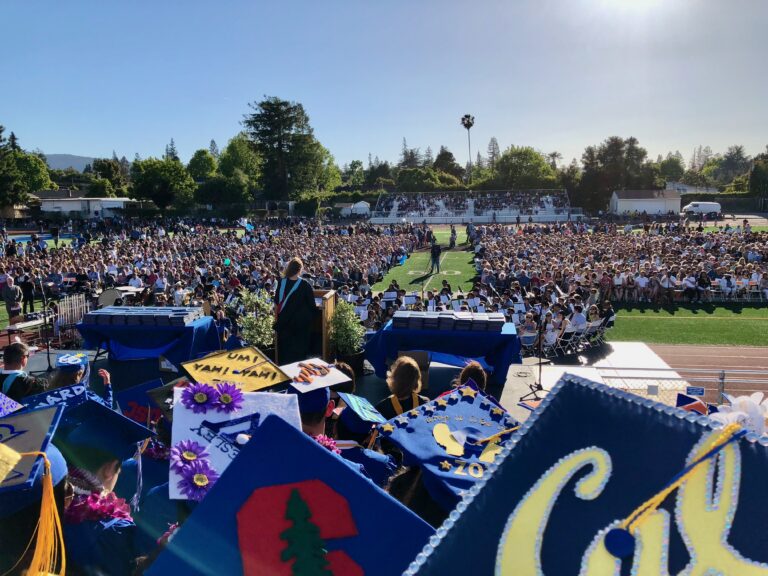
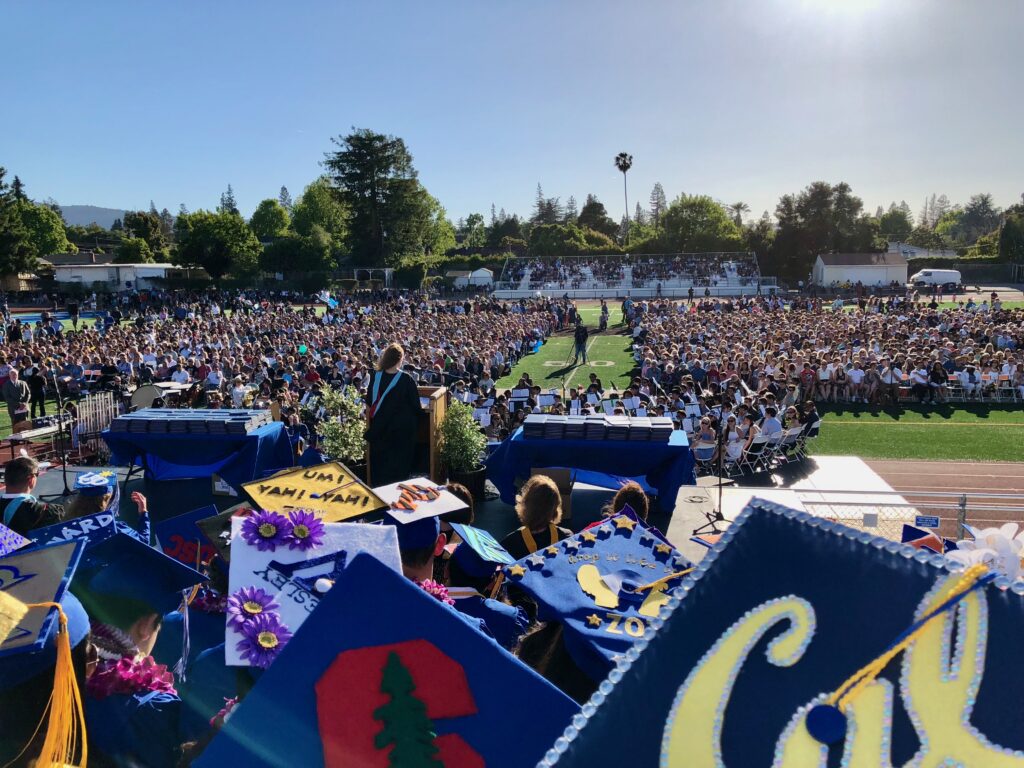
I have been a school counselor for 20 years… until now. For the first time in my education career, I am a full-time independent counselor, and I love it. That said, I’m realizing that there’s a certain amount of grief and discovery in making this transition; school will always be a big part of my counselor identity. There is a lot to be said for the camaraderie of a school community, seeing my students graduate after four years of knowing them and watching them grow, and even having a College/Career Center onsite where uni reps come visit and we can hold college fairs. And also! Schools come with many challenges, and it’s often hard to know one’s students as well as we’d like because there are almost always too many students per counselor. As an IEC, working closely with students on every facet of their college applications, getting to know them well, and being the boss of my time are all gifts that I cherish.
Many students feel like their school counselor doesn’t know them or is too busy to care about them. I know what it’s like to have nearly 400 students under my care (and that’s at a well-resourced school– it could be double or more). While there are certainly poor school counselors, as there are poor IECs, poor teachers, poor engineers, poor doctors, poor designers, etc., I fully believe that the large majority of us are doing the very best we can to help students in the best possible way and in good faith.
Being that we’re in October (i.e. prime time for college applications in the U.S.), I thought this would be a good time to make a plug for the importance of school counselors. Since I started working with students independently eight years ago, I’ve felt that being an IEC made me a better school counselor, and being a school counselor made me a better IEC. A lot goes on on both sides of this work, and there is unfortunately a not-insignificant amount of friction between the roles of IECs and school counselors. In reality, students need so much support, and every single one of them deserves to have a caring and qualified adult working with them to make a future plan and tackle the applications; there is space for all of us.
School Counselor Functions
For families working with an IEC, sometimes there’s the notion that they no longer need to interact with the school counselor or pay much attention to college information coming from the school, and I’m here to tell you as an IEC that that is simply untrue! While the IEC is working on the nitty-gritty of the applications with the student outside of school, there are essential pieces of the process (as well as other important interventions) that an IEC cannot do or facilitate. Behold, a table:
| Function | School Counselor | Independent Counselor |
|---|---|---|
| Build relationships with students | Yes – sometimes limited capacity | Yes |
| Help students find “good fit” colleges & build college list | Yes – likely limited capacity | Yes |
| Write letters of recommendation | Yes | No |
| Review/assist with essays | Maybe – likely limited capacity | Yes |
| Meet with students regularly | Maybe – not likely in large/public schools | Yes |
| Send transcripts & school documents | Yes | No |
| Create tailored calendar/outline for organizing & managing applications | No | Yes |
| Strategize testing & activities | Yes – likely limited capacity | Yes |
| Refer for mental health or learning support | Yes | Maybe – likely limited capacity/out of scope |
| Liaise with teachers | Yes | No |
| Plan college fairs/host college reps | Yes | Maybe – usually not |
| Participate in ongoing professional development & college visits | Yes – sometimes limited due to demands of other duties/roles | Yes |
| Have strong understanding of school curriculum & daily inner-workings | Yes | Maybe – depending on background & training |
| Assist in finding scholarships | Yes – especially school- and community-based | Maybe |
| Care about their students | YES! 🎉 | YES! 🎉 |
As you can see, there is certainly some overlap, but each of these counseling professionals fulfills some distinct roles and functions that are essential to the successful completion of every student’s applications. I noted “limited capacity” a few times for school counselors, and I want to elaborate on this further to help demystify why students may sometimes feel that their counselor doesn’t know them or have time for them. School counselors are generally wearing MANY hats– often at the same time. Crises happen throughout the day, and they literally do not know who or what is going to walk through the door on any given day. School counselors are often “comprehensive” counselors, which means in addition to doing college counseling, they are also doing:
- Crisis management / social-emotional support + mental health referrals
- Course scheduling, registration, and changes
- Managing learning support plans (504s and/or IEPs)
- Monitoring students’ academic progress and checking in with struggling students
- Monitoring high school graduation requirements and progress
- Managing summer school enrollment for students who failed classes
- Managing mountains of email and paperwork
- Delivering class presentations
- Sitting in many, many, MANY meetings
In other words, college counseling might be a small part of a school counselor’s duties for a very large caseload of students. Because they are doing so much, they may also not have in-depth training in college counseling or be able to visit colleges regularly (not for lack of desire). That said, they are the only ones who can submit school documents on behalf of the student, such as counselor recommendation letters, transcripts, Common App school reports, etc. These can never come from an IEC, no matter how well the IEC knows the student, so school counselors play a very unique and important role in the college application process. P.S. They can also nominate students for school-based and community scholarships, which an IEC cannot.
International Schools
A note specifically about international schools: Another challenge in school counseling is that in schools across the world, there is not necessarily a designated school counselor. This is generally considered an American concept originally, though many international schools do have them nowadays. That said, a title doesn’t always mean the person is a credentialed/qualified/experienced counselor like in the U.S. This might look like: a teacher being assigned to help with college applications as a side duty, a part-time person allocated a very small number of hours, or someone without a counseling background hired for the position. There is no standardization, and it is very hard to hire abroad and retain good talent for various reasons that are out of scope of this conversation; suffice it to say, some international schools are not able to offer a wealth of college counseling support, even for small student caseloads.
The IEC Role
But here is where your IEC comes in! It is exactly our role to work with students one-on-one on a thorough level on all pieces of the application, in order to help students present themselves to colleges in the best possible way. Where school counselors do not generally have time to work in a detailed way on essay reviews, list-building, and activity-planning, that is the speciality of an IEC who is focused solely on college applications without performing multiple other roles throughout the day. A highly competent IEC will be visiting colleges at every opportunity, attending conferences and webinars, and constantly learning as much as they can in every admission cycle to be able to stay on top of admissions information, updates, trends, and best practices. Regardless of how much support a school counselor can offer, this is a dedicated and individualized level of expertise that can make a big difference in a student’s application journey.
Misunderstandings & Their Effect on Everyone
While good school counselor-IEC collaboration certainly exists out there, there is unfortunately also a lot of misunderstanding (at best) and contempt (at worst) on both sides. Sometimes school counselors think private counselors give students unrealistic expectations or bad advice; sometimes IECs think school counselors don’t know what they’re doing or will miss submission deadlines.
I remember on many occasions when my students in California would come into my office at the beginning of senior year and say something like, “My private counselor said I need to take AP Calculus BC for Engineering, so I need a schedule change.” That may not sound complicated, but the problem is, in order to build a massively complex master class schedule serving 2,000+ students, school administrators must start building it the spring before, and this means that students are asked to select their courses in the winter/spring– several months before the new school year begins, and several months before college applications get serious.
Thus, such a request at the beginning of the school year is often not possible because classes are full or conflict with something else in the student’s schedule. This puts the school counselor in the tough position of being the bad guy who says no, when it’s actually not in their control. This one request may not seem like much, but when it’s hundreds of students needing just one little change, the ripple effect becomes magnified severalfold. That IEC probably didn’t have insight into how master scheduling works and didn’t realize that it’s quite difficult to make this change at the beginning of senior year. Nonetheless, the student ends up feeling that the school counselor didn’t serve them well and may blame the counselor later for not being accepted to colleges if the request wasn’t accommodated. (And of course there are many reasons to be rejected from a college, which we can never know.)
On the flipside, let’s say there’s a student applying to UK universities, which almost always means applying through the UCAS portal. Most U.S. school counselors do not have experience with international applications and are not familiar with the process and requirements. One of the important differences is that “predicted grades” are required for UK applications, which are typically predictions of a student’s A-Level or IB exam scores at the end of the year, on which conditional admission offers are based. This is a totally foreign concept in most U.S. schools– teachers are certainly not in the business of predicting class grades or AP test scores!
And yet, it’s standard practice for UK applications and is essential for a UK applicant in order to have their application read and processed. When I worked at my school in California, I was able to educate teachers and other counselors from the inside about this. As an IEC working with students externally, I am happy to liaise with school counselors in order to explain the process and walk them through the basics of UCAS. Some counselors have been very willing, while others were skeptical and less cooperative. This may be due to mistrust, or simply a desire to protect student privacy or teacher liability (which is unfounded because teachers are not held liable for missed scores). However, ultimately it only hurts students if we are not working together to fill in gaps that help them strive toward their college goals.
Seriously, We Got This… Together
As students and their families are navigating the last intense days leading up to Early Action and Early Decision deadlines, I wanted to come here and plug the importance of school counselors. By and large, those counselors are the ones who see students grow from Grade 9 through graduation, the ones who have hard conversations about grades and bullying, the ones who calm down anxiety attacks in their office, the ones who are, despite always being super busy, rooting for their students to reach the moon. Let’s give each other the benefit of the doubt and all work together to help our students get through this fraught application period and celebrate their college admission wins over the next many months!

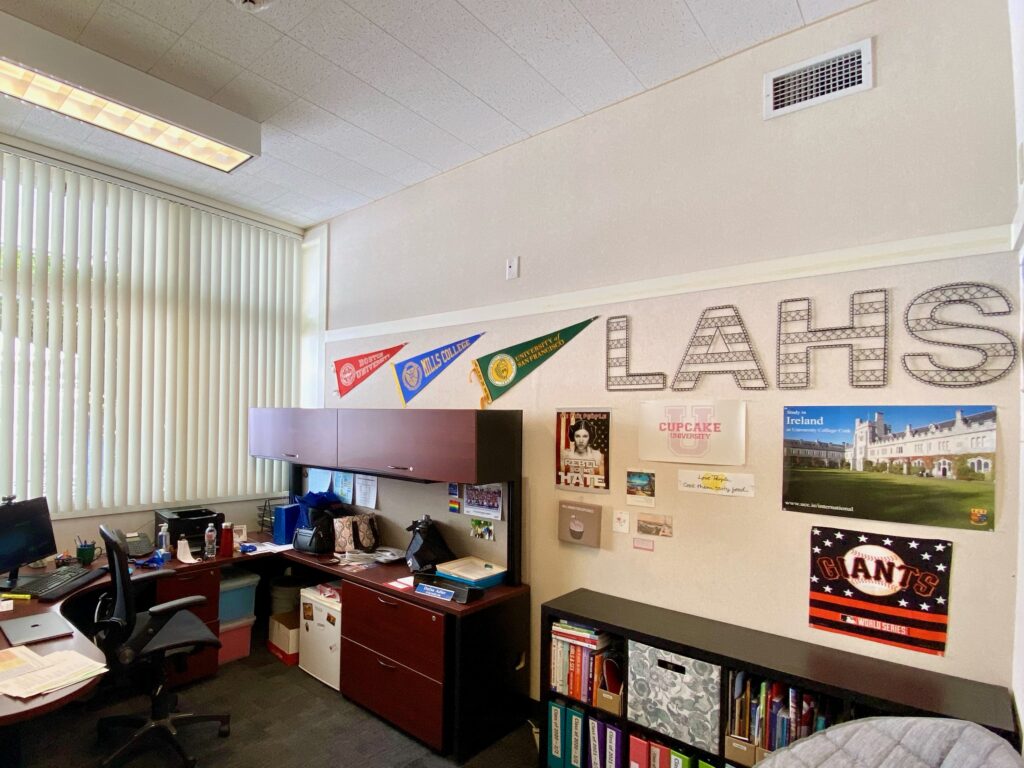
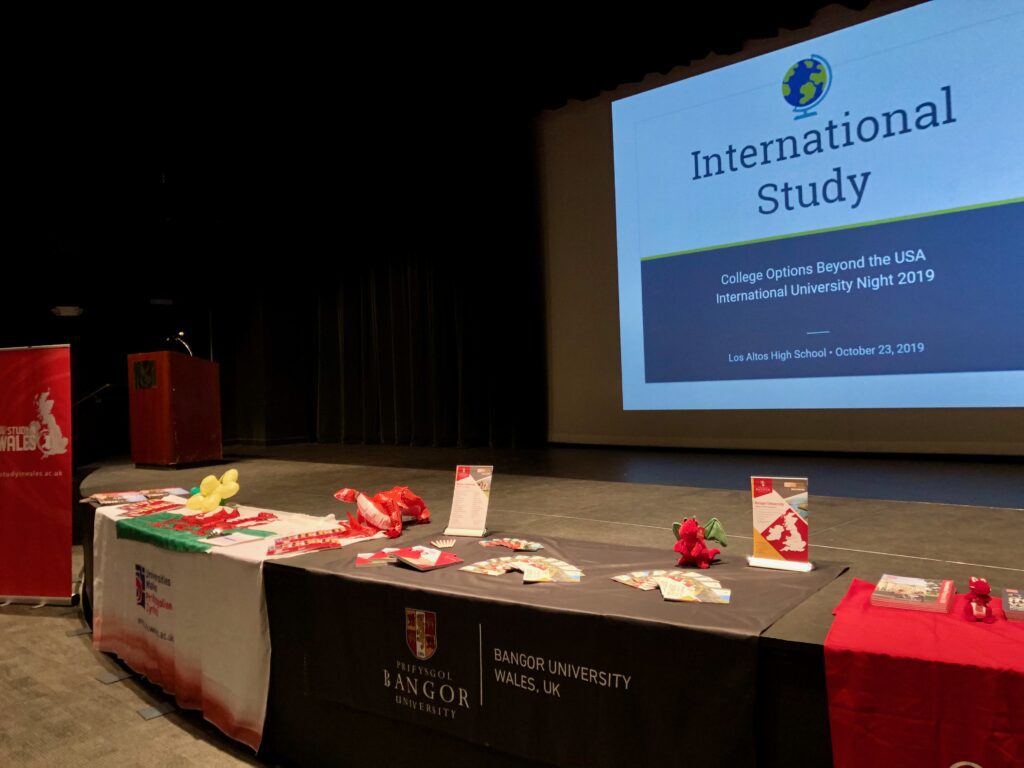
Clockwise from top-left: First-ever International University Fair held at my school in 2022, pictured with Peter Brimstone formerly of Queen’s University Belfast and Alana Stuart of University of East Anglia; same fair with Emma Schwartz formerly of University of York (now co-founder of Transfer Abroad Network); American University of Rome college fair display table; a little Halloween fun in the office back in 2016; the infamous Class of 2020 graduation drive-by parade, since we couldn’t hold a proper graduation during Covid; University of St. Andrews college fair display table.
© 2026 Dafna Adler & Wanderlust College Counseling